About AgriLife Foundation Seed

What is AgriLife Foundation Seed?
Texas A&M AgriLife Foundation Seed supports the development, protection, and responsible use of improved crop varieties across Texas agriculture.
AgriLife Foundation Seed works at the intersection of public plant breeding, seed production, and licensing to ensure genetically pure seed and plant materials move from research programs into reliable, lawful agricultural use.
As a self-supporting, nonprofit unit of Texas A&M AgriLife Research based near Vernon, Texas, AgriLife Foundation Seed connects breeding programs with licensed partners, provides seed production and conditioning services, and helps safeguard breeder investments. Through this work, the program supports long-term varietal integrity, regulatory compliance, and dependable crop production statewide.
Jump to:
Operational Capabilities |Seed Production and Processing | Memberships
Our work spans research support, licensing, seed production, and partnerships. Learn more about each area below.
Our work spans research support, licensing, seed production, and partnerships. Learn more about each area below.
AgriLife Foundation Seed supports the commercialization of new plant varieties by coordinating licensing efforts between AgriLife Research breeding programs and industry partners. Working in collaboration with Texas A&M Innovation, AgriLife Foundation Seed helps facilitate evaluation and commercial licenses that move improved plant materials from research into production.
AgriLife Foundation Seed also supports commercialization efforts through participation in Texas A&M AgriLife internal committees, including the Small Grains Advisory Committee, and Plant Review Committee. These groups help guide variety evaluation, release decisions, and licensing strategies to ensure new plant materials move efficiently from research to market.
AgriLife Foundation Seed is self-supporting through seed sales and service activities, with revenues reinvested to support ongoing crop improvement research. The program works closely with Texas A&M AgriLife units, private growers, and seed companies to support production, sponsored research, and public–private partnerships.
AgriLife Foundation Seed manages executed license agreements, including compliance monitoring and royalty collection, to protect breeder rights and licensed technologies. The program also serves as the sales and marketing agent for USDA Plant Materials Centers in Texas, supporting the distribution of conservation and plant materials statewide.
AgriLife Foundation Seed works in close partnership with plant breeders, researchers, producers, and licensed entities to support the development, evaluation, and responsible commercialization of improved crop varieties.
These partnerships support coordinated seed increase, conditioning, licensing, and distribution while maintaining varietal integrity, regulatory compliance, and alignment with industry best practices. Through this collaborative work, AgriLife Foundation Seed helps move research-developed varieties into agricultural use in a way that supports long-term value for breeders, growers, and the seed industry.
AgriLife Foundation Seed also collaborates internally across Texas A&M AgriLife programs and committees that support crop research, evaluation, and commercialization, including Texas A&M Innovation, the Small Grains Advisory Committee, and the Plant Review Committee. This coordination helps ensure that research priorities, commercialization decisions, and seed production activities remain aligned.
In addition, AgriLife Foundation Seed works with regional research and extension programs that complement variety development and deployment, including applied economic research, agronomic evaluation, and producer-focused decision support across the Texas Rolling Plains.
Related Regional Research and Extension Programs
Ag Economics on the Plains
Supports applied economic research and decision tools for producers in the Texas Rolling Plains, complementing crop research and variety deployment.
Texas Rolling Plains Agronomy
Focuses on crop production systems, variety performance, and management practices that align with AgriLife Foundation Seed’s role in advancing research-based cultivars.
AgriLife Foundation Seed supports the production, conditioning, and handling of genetically pure seed and plant materials for public and private breeding programs. Processing activities are designed to preserve varietal integrity and seed quality for planting.
Core Operational Capabilities
Seed Processing and Conditioning
For peanut programs, see our Identity Preserved Peanut Shelling capabilities.


Wheat
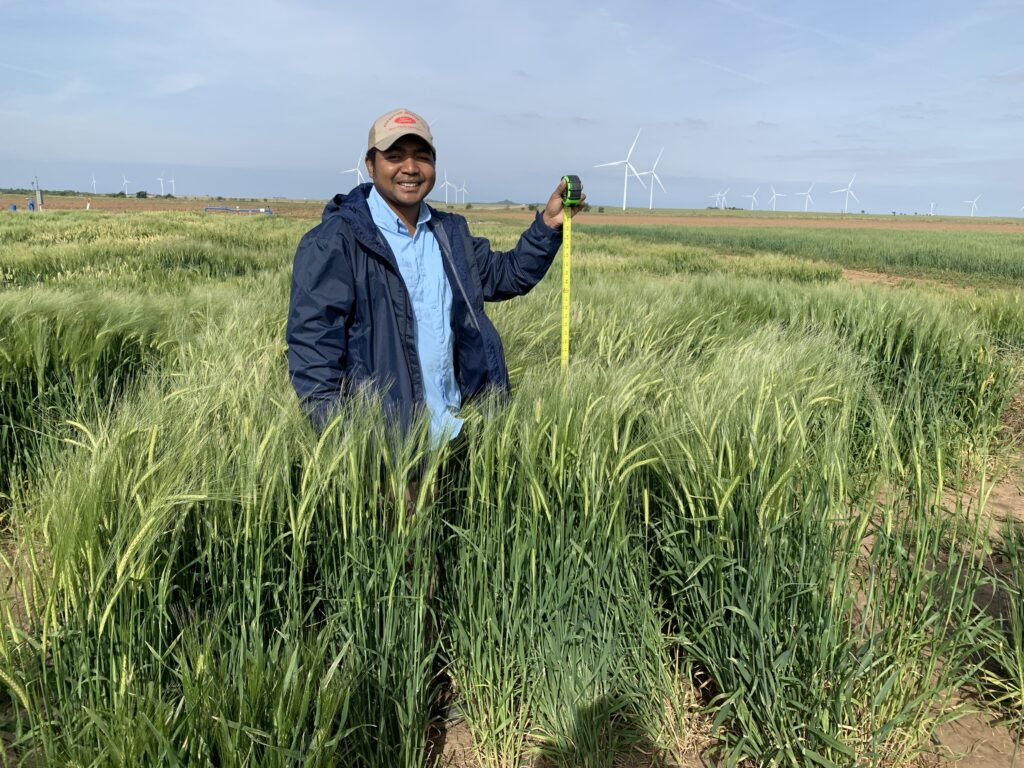
Leaving seed crops in the field until moisture levels are acceptable can result in yield and quality losses, genetic contamination, and reduced germination and vigor. AgriLife Foundation Seed operates a multipurpose drying facility for drying foundation seed and breeder seed increases to support the wheat program. The seed-drying facilities also help safeguard harvested seed against adverse weather conditions.
Peanuts
AgriLife Foundation Seed is a buying point for foundation class peanuts grown locally under contract. Newly harvested farmer’s stock is run through a sand screen and cleaned of soil and other foreign matter. If needed, the peanuts are dried down to acceptable moisture content. After samples are drawn from a farmer’s stock, the state inspector uses USDA-approved equipment to grade the seed peanuts.
The resulting analysis for sound mature kernels, splits, foreign matter, moisture content, aflatoxin presence, and freeze damage forms the basis of reports to the USDA, payments to the National Peanut Board, and payments to contracted growers. Graded seed peanuts are shelled in-house, treated, and bagged for delivery to licensed growers.
Identity Preserved Peanut Shelling
Texas A&M AgriLife Foundation Seed operates a specialized peanut sheller built specifically for the seed industry. Unlike commercial food-grade shellers, this system is engineered to shell peanuts without producing splits or damaged kernels. Preserving whole seed integrity is critical for planting, emergence, and stand establishment.
This capability allows small, identity-preserved lots to be processed while maintaining varietal purity and germination potential and supports peanut breeding and commercialization efforts statewide.

Texas A&M AgriLife Research and Extension Center at Vernon
AgriLife Foundation Seed is based in Vernon, Texas, alongside the Texas A&M AgriLife Research and Extension Center at Vernon, a hub for applied agricultural research in the Rolling Plains region. Proximity to the center helps AgriLife Foundation Seed work closely with public programs that evaluate, improve, and advance regionally important crops.
Industry Memberships
AgriLife Foundation Seed maintains active memberships in state, regional, and national seed and agricultural organizations that support certification standards, regulatory compliance, and industry best practices.